Poully: A Quirky Handwritten Typeface for Standout Branding
I was staring at a blank brand board, trying to break the monotony of yet another geometric sans-serif logo concept. The client wanted something that felt approachable but undeniably authentic—less "corporate tech startup" and more "neighborhood favorite." That’s when I pulled Poully from my library. It wasn’t just another script font; it had this specific energy, a blend of fun and quirkiness that immediately shifted the mood of the entire layout.
If you are a designer tired of sterile typefaces or an entrepreneur looking for a visual voice that actually sounds like you, Poully might be the creative font you’ve been hunting for. Released by Script Amp, this handwritten typeface doesn’t just sit on the page; it performs. After testing it across everything from packaging mockups to website headers, here is my honest take on how Poully handles the pressure of real-world branding.
The Personality Behind the Ink
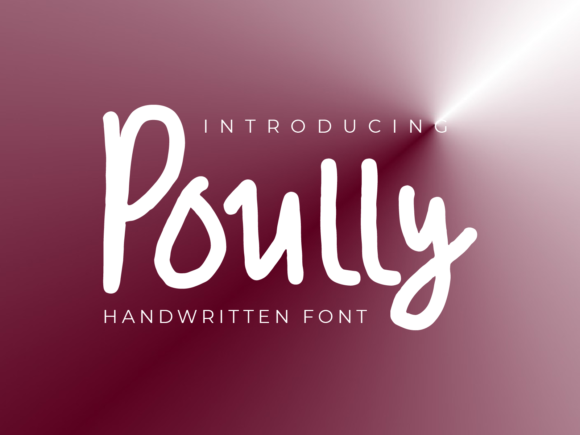
What strikes you first about Poully is its authenticity. It doesn’t try to mimic perfect calligraphy or rigid brush strokes. Instead, it feels like someone wrote it quickly with a marker or a fine liner, capturing the natural rhythm of human hand movement. This makes it incredibly versatile for brands that want to signal creativity without sacrificing legibility.
In typography terms, Poully sits comfortably in the script font category but leans heavily into the handwritten aesthetic. It has a relaxed slant and variable stroke widths that give it character. When I placed it on a draft logo for a hypothetical boutique skincare line, it instantly softened the overall look. It told the viewer, "This product is handmade, thoughtful, and not afraid to be a little imperfect."
This enchanting quality is what turns any creative idea into a true standout. Unlike formal serif fonts that can feel distant, or standard sans serifs that can feel generic, Poully brings warmth. It embodies a sense of playfulness that is rare to find in commercial typefaces. It’s not just a font; it’s a tone of voice.
Real-World Testing: From Logo to Packaging
To see if Poully could hold up under professional scrutiny, I put it through a rigorous stress test during a recent rebranding project for a local artisanal bakery. Here is how it performed across different design assets:
- Logo Design: Poully works beautifully as a primary logotype for small businesses. Its unique letterforms create strong wordmarks. However, because of its decorative nature, it shines best in short names (two to four words). I found that using it for longer company names resulted in visual clutter.
- Packaging Design: On product labels, Poully adds immediate shelf appeal. The quirky ligatures and swashes catch the eye. I used it for the flavor descriptions on cookie tins, and it looked stunning against minimalist backgrounds. It bridges the gap between craft and commerce perfectly.
- Social Media Graphics: For Instagram posts or Pinterest pins, Poully is a powerhouse. In a feed full of clean, corporate imagery, a headline set in Poully stops the scroll. It works exceptionally well as an accent font for quotes, sale announcements, or event dates.
- Web Design: I tested Poully in a homepage hero section. While it made a bold statement, I learned quickly that it should not be used for body text. It performed best as a display font for headlines, paired with a clean sans serif font for readability.
- Business Cards & Print: On printed cards, the texture of the handwritten style translates well, provided the print resolution is high. It gives a tactile feel to digital designs, making them seem more personal.
The versatility of Poully lies in its ability to act as both a star and a supporting player. It can carry a whole brand identity on its own for very niche projects, but it often plays better as part of a modern typography system.
Font Pairing and Visual Hierarchy
One of the most critical aspects of using a creative font like Poully is knowing what to pair it with. Because Poully has so much personality, it needs a calm partner to balance the composition. My go-to pairing strategy involves contrasting its organic curves with structured geometry.
A clean sans serif font is the safest and most effective choice. Think of fonts like Montserrat, Lato, or Helvetica Neue. The neutrality of the sans serif allows Poully to take center stage while ensuring that your informational text remains easy to read. This combination creates a clear visual hierarchy: Poully grabs attention, and the sans serif delivers the message.
Alternatively, you can pair Poully with a classic serif font for a more editorial or vintage vibe. This works well for restaurant menus or book covers where you want to evoke tradition mixed with a touch of whimsy. Just ensure the serif has enough weight to stand up to the handwritten style of Poully without getting lost.
Avoid pairing Poully with other script or handwritten fonts. Unless you are highly experienced in typography, mixing two decorative scripts often leads to a chaotic and unprofessional look. Let Poully be the only script in the room.
Technical Considerations and Features
When reviewing the file package from Script Amp, I appreciated the attention to detail. The font includes multiple weights, which is crucial for creating depth in your designs. You aren't stuck with just one thickness. There are also alternates and ligatures built-in, which add extra flair to specific letter combinations. These features allow you to customize the look of your text without manually altering each character.
For web designers, check if the font is available as a webfont. If you plan to use Poully extensively on a website, having a web-ready format ensures consistent rendering across browsers. However, always remember that screen rendering of handwritten fonts can sometimes appear jagged or pixelated if not optimized correctly. Test it at various sizes before committing to it for digital interfaces.
Where Poully Should Not Be Used
No typeface is a silver bullet, and Poully has its limitations. It is not suitable for long-form body text. Trying to read paragraphs of Poully is exhausting and defeats the purpose of good UX design. Keep it reserved for headlines, titles, logos, and short phrases.
Additionally, avoid using Poully for formal corporate communications, legal documents, or technical manuals. Its quirkiness undermines the seriousness required in these contexts. If you are designing for a law firm, a hospital, or a financial institution, stick to traditional serif or sans serif typefaces that convey stability and trust.
Also, consider your audience. If your target demographic is older adults who may have difficulty reading stylized text, Poully might hinder accessibility. Always prioritize legibility over aesthetics when designing for broad audiences.
Final Practical Advice
Before incorporating Poully into your final client work, I strongly recommend creating a comprehensive brand board. Place the font next to your color palette, imagery, and other design elements to see how it harmonizes. Does it clash? Does it complement? Sometimes, seeing the font in context reveals issues that aren't apparent when viewing it in isolation.
Finally, always review the licensing agreement. As a commercial font, Poully requires proper licensing for business use. Whether you are creating logos, packaging, templates, or merchandise, ensure you have the correct rights to use the typeface. Using unauthorized fonts can lead to legal complications down the road.
Poully is more than just a pretty face in the world of fonts. It is a tool that can inject life, humor, and authenticity into your projects. By understanding its strengths and respecting its limitations, you can leverage this enchanting handwritten font to create brand identities that truly resonate. So, open up your design software, grab Poully, and see how it transforms your next creative idea into something unforgettable.